
In today’s busy world, many people feel stressed, distracted, and overwhelmed. Work pressure, social media, and constant noise make it difficult to slow down. Because of this, many people are looking for simple ways to calm their minds and understand themselves better.
One powerful method that has helped people for centuries is Vipassana meditation. This ancient practice focuses on awareness, observation, and inner clarity. Moreover, it helps people develop a deeper understanding of their thoughts, emotions, and reactions.
So, what exactly is Vipassana? Why do people practice it? And how can it benefit your life? Let’s explore.
What Is Vipassana Meditation?
Vipassana is one of the oldest meditation techniques in the world. In fact, it began in India more than 2,500 years ago. The word Vipassana means “to see things as they really are.”
In simple terms, Vipassana meditation teaches you to observe your mind and body with awareness. Instead of trying to control your thoughts, you simply watch them as they appear and disappear.
During Vipassana practice, you focus mainly on three things:
- Your natural breathing
- Sensations in your body
- Thoughts and emotions that arise
However, the goal is not to judge or change these experiences. Instead, you simply observe them calmly.
As a result, you begin to understand how your mind works.
The Core Idea Behind Vipassana
The main idea behind Vipassana is awareness without reaction.
Normally, when something happens, we react immediately. For example, if someone criticizes us, we may feel angry. Similarly, if something pleasant happens, we may become attached to it.
However, Vipassana teaches a different approach.
First, you notice the experience. Then, you observe the sensation or emotion. After that, you allow it to pass naturally.
Because of this process, you gradually learn that all sensations and emotions are temporary.
Therefore, instead of reacting automatically, you respond with awareness.
Why Do People Practice Vipassana?
People practice Vipassana for many reasons. However, the main reason is self-understanding.
Many people spend their lives reacting to situations without fully understanding their own thoughts and emotions. Consequently, this can lead to stress, frustration, and confusion.
Vipassana helps break this cycle.
First of all, it teaches you to observe your mind. Next, it helps you recognize patterns in your thoughts and emotions. Finally, it allows you to develop greater balance and clarity.
Because of this, many people experience deep personal growth through Vipassana practice.
Benefits of Vipassana Meditation
Vipassana meditation offers many benefits. Although it is a simple practice, its impact can be powerful over time.
1. Reduces Stress
First and foremost, Vipassana helps calm the mind.
When you observe your thoughts instead of reacting to them, your stress levels naturally decrease. As a result, you feel more relaxed and balanced.
2. Improves Emotional Awareness
Next, Vipassana helps you understand your emotions more clearly.
Instead of being controlled by anger, fear, or frustration, you learn to observe these emotions calmly. Therefore, you can respond more wisely in difficult situations.
3. Strengthens Focus
In addition, Vipassana improves concentration.
Since the practice requires you to observe your breath and body sensations, your attention becomes stronger over time. Consequently, this improved focus can help you in work, study, and daily activities.
4. Encourages Self-Understanding
Another important benefit is self-awareness.
Through regular practice, you begin to notice how your thoughts and reactions shape your experiences. Because of this awareness, you gain deeper insight into your habits and behaviors.
5. Creates Inner Peace
Finally, Vipassana helps develop a sense of inner peace.
As you continue practicing, you learn that thoughts and emotions come and go. Therefore, you become less attached to temporary experiences.
Over time, this understanding creates a deeper sense of calm and stability.
How Vipassana Is Usually Practiced
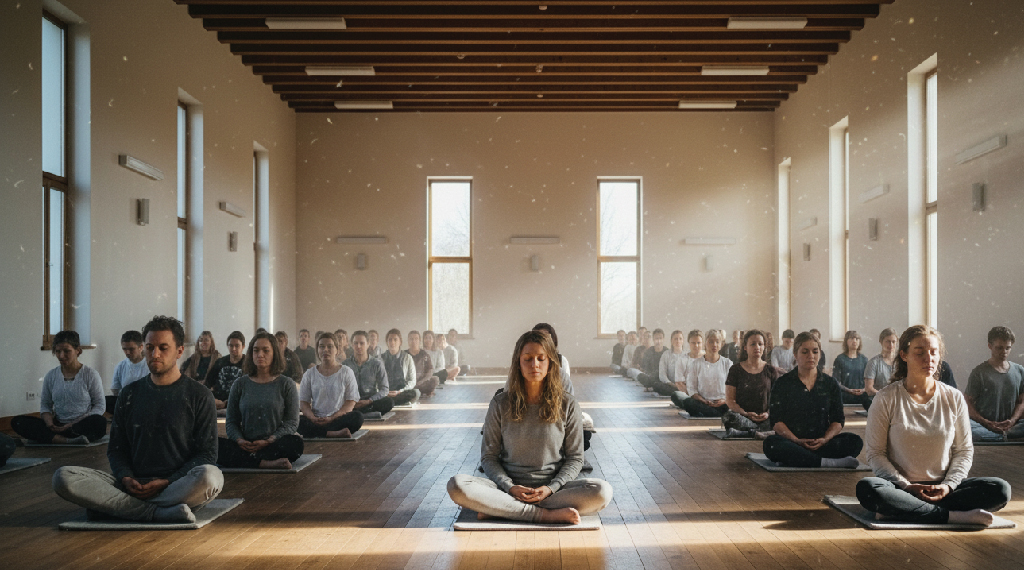
Many people first learn Vipassana through 10-day silent meditation retreats. During these retreats, participants meditate for several hours each day while maintaining silence.
In addition, they avoid distractions such as phones, books, and conversations. Because of this environment, they can focus completely on their meditation practice.
However, you do not need to attend a retreat to begin Vipassana.
You can start with a simple daily practice.
First, sit in a quiet place. Next, close your eyes and focus on your breathing. Then, observe any sensations or thoughts that arise.
Most importantly, remain calm and aware.
Even a few minutes of daily practice can be helpful.
Vipassana in Daily Life
Vipassana is not only a meditation technique. In fact, it is also a way of living with awareness.
For example, while eating, you can observe the taste and texture of your food. Similarly, while walking, you can notice the movement of your body.
In addition, you can observe your reactions during conversations or stressful situations.
Because of this constant awareness, everyday experiences become opportunities for mindfulness.
Challenges in Vipassana Practice
Although Vipassana is simple, it can be challenging at first.
For example, beginners often find it difficult to sit quietly. Similarly, the mind may wander frequently.
However, this is completely normal.
Instead of becoming frustrated, you simply notice the distraction and return your attention to the present moment.
Over time, patience and consistency make the practice easier.
Final Thoughts
Vipassana meditation is a simple yet powerful practice that has helped people for thousands of years.
First, it teaches awareness of the present moment. Next, it helps you observe thoughts and emotions without reacting. Finally, it allows you to understand your mind more deeply.
Because of these benefits, many people experience greater clarity, balance, and peace through Vipassana.
In a world filled with constant distractions, learning to observe your mind can be life-changing.
Therefore, if you are searching for a way to develop inner calm and self-awareness, Vipassana may be a valuable practice to explore.